• 2 months 3 weeks ago Help us improve our website: http://t.co/vY9vRzmYRH! Please take our visitor survey: http://t.co/8gY0wRZtGx. Thank you...
  • 2 months 3 weeks ago 1st European Research Forum on Healthy Ageing: 03 Sept in Bxl. Policy makers, scientists, industrials: save the date! http://t.co/6TXrBI5rdt
  • 3 months 4 days ago Gender inequalities in health: a matter of policies according to @sophieproject http://t.co/TzwZzXko3g
  • 4 months 1 day ago 1/3 of cancer patients killed by 'fat-burning' process termed cachexia, @CNIO_Cancer researchers say http://t.co/GjfipsdG2R
  • 4 months 4 weeks ago New EU research project @pneumonp aims to tackle antibiotic resistance via inhalable nano therapeutics #nanomedicine http://t.co/VQN9WHojG2
  • 5 months 2 weeks ago Urban renewal improves the health of neighbours in Barcelona according to EU-funded project @sophieproject http://t.co/F0mKCdPBZ5
  • 5 months 2 weeks ago Check this article on #CommHERE: how to spread the word about research and reach out beyond the scientific community http://t.co/VDcKVDEfcc
  • 6 months 2 weeks ago Scientists @CNIO_Cancer among the 40 most important global researchers http://t.co/Rc0hIsq6dN
  • 6 months 3 weeks ago 2nd workshop @CIBER_ISCIII to strengthen the EU‐LAC Health Research Cooperation http://t.co/93qLQObcQj
  • 8 months 2 weeks ago The European Symposium in Drug Synthesis @unisiena will take place on May 18-23. You can register until April 15!! http://t.co/V8kxQIev9S

EMTICS

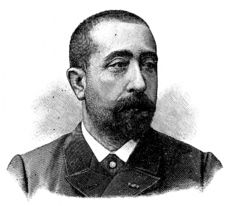
Portrait of Dr Pieter Hoekstra, Scientific Coordinator of EMTICS

Dr Pieter J. Hoekstra

Scientific Coordinator of EMTICS, based at University Medical Center Groningen, the Netherlands

Research field

Childhood Psychiatry

If you like this
If you want to know more
Research Profile

Who?

“I am a clinician trying to offer the best treatments to young patients and their families as well as a researcher. In both roles, I am all too well aware of the large gaps in the knowledge of tics. EMTICS is trying to change this in the best interest of our patients”, says Pieter Hoekstra, Child and Adolescent Psychiatrist.

Why?

Tics are quite common in children and can become a large burden. It is important to know why some children develop tics while others do not. We know that tics are related to processes in the brain and that genes play a role. But infections may also be important: some children suddenly develop tics after a throat infection.

What?

EMTICS wants to identify the causes of tics in children and to find an effective treatment. Tics are sudden, rapid, repeated, non-rhythmic and recurring movements or vocalisations. Examples are eye blinking and throat clearing. “We are especially interested in the role of autoimmunity and infections”, says Dr Hoekstra.

How?

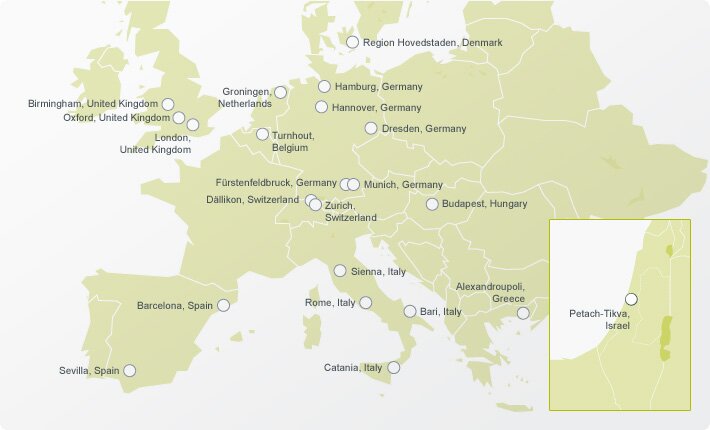
EMTICS brings together experts from 10 countries. We study 500 children whose parents or siblings have tics. We expect one third of them to develop tics themselves. A second study group includes 700 children with tics. Our question is: what factors determine who develops tics and changes in the frequency and severity of tics?

Elucidating the causes of tics

In the Picture
In the Picture
Image credits

Background image: Brad Flickinger

Portrait of the project coordinator: EMTICS

Timeline (in chronological order): 1918-1926: Ranveig; 2005: Centers for Disease Control and Prevention